Wunderkammer
Wunderkammer
Wunderkammer
01
Wunderkammer
SPACES
2024,
Milano
Photo credits:
Carlo di Pasquale

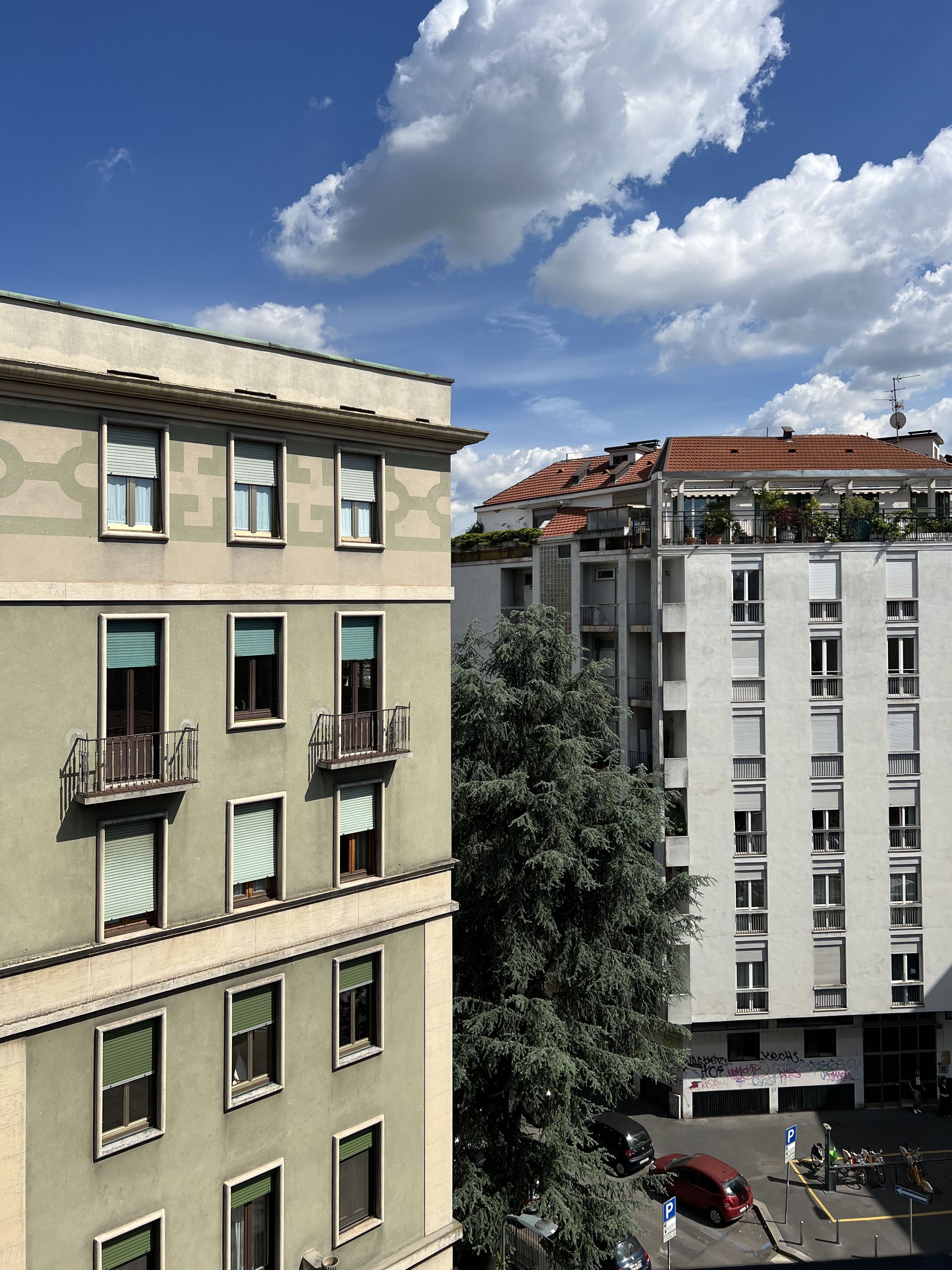
Overlooking one of the small squares in Milan’s Nolo district is the apartment of Giulia Cribellati and Federico Bellucci, who have been living and working in the neighborhood for several years. The couple is involved in vintage and design: Giulia runs her space “da Flea,” where she displays and sells a personal selection of ceramics, glassware, small furniture and decorative objects. Federico operates the well-known “Magazzino 76” and the more recent “Galleria Bellucci,” large industrial spaces located beneath the railway arches, where he showcases an extensive collection of furniture pieces spanning every era and style. For their own home, they desired a flexible space that could accommodate a constantly evolving array of objects. Almost by chance, they found an apartment on the sixth floor of a 1960s building, a typical Milanese interior with palladiana flooring and wallpapered walls, with the living and sleeping areas strictly divided by a long central corridor. To reimagine the space, the couple commissioned the project to Chiara Lionello, who transformed the apartment through a series of light yet deeply transformative interventions, creatively reinterpreting what already existed.

SPACES
2024,
Milano
Photo credits:
Carlo di Pasquale

Overlooking one of the small squares in Milan’s Nolo district is the apartment of Giulia Cribellati and Federico Bellucci, who have been living and working in the neighborhood for several years. The couple is involved in vintage and design: Giulia runs her space “da Flea,” where she displays and sells a personal selection of ceramics, glassware, small furniture and decorative objects. Federico operates the well-known “Magazzino 76” and the more recent “Galleria Bellucci,” large industrial spaces located beneath the railway arches, where he showcases an extensive collection of furniture pieces spanning every era and style. For their own home, they desired a flexible space that could accommodate a constantly evolving array of objects. Almost by chance, they found an apartment on the sixth floor of a 1960s building, a typical Milanese interior with palladiana flooring and wallpapered walls, with the living and sleeping areas strictly divided by a long central corridor. To reimagine the space, the couple commissioned the project to Chiara Lionello, who transformed the apartment through a series of light yet deeply transformative interventions, creatively reinterpreting what already existed.

Wunderkammer
Wunderkammer, bedroom detail
02
Wunderkammer, bedroom detail
Wunderkammer, Living room n°2
03
Wunderkammer, Living room n°2
Wunderkammer, Living room n°3
04
Wunderkammer, Living room n°3
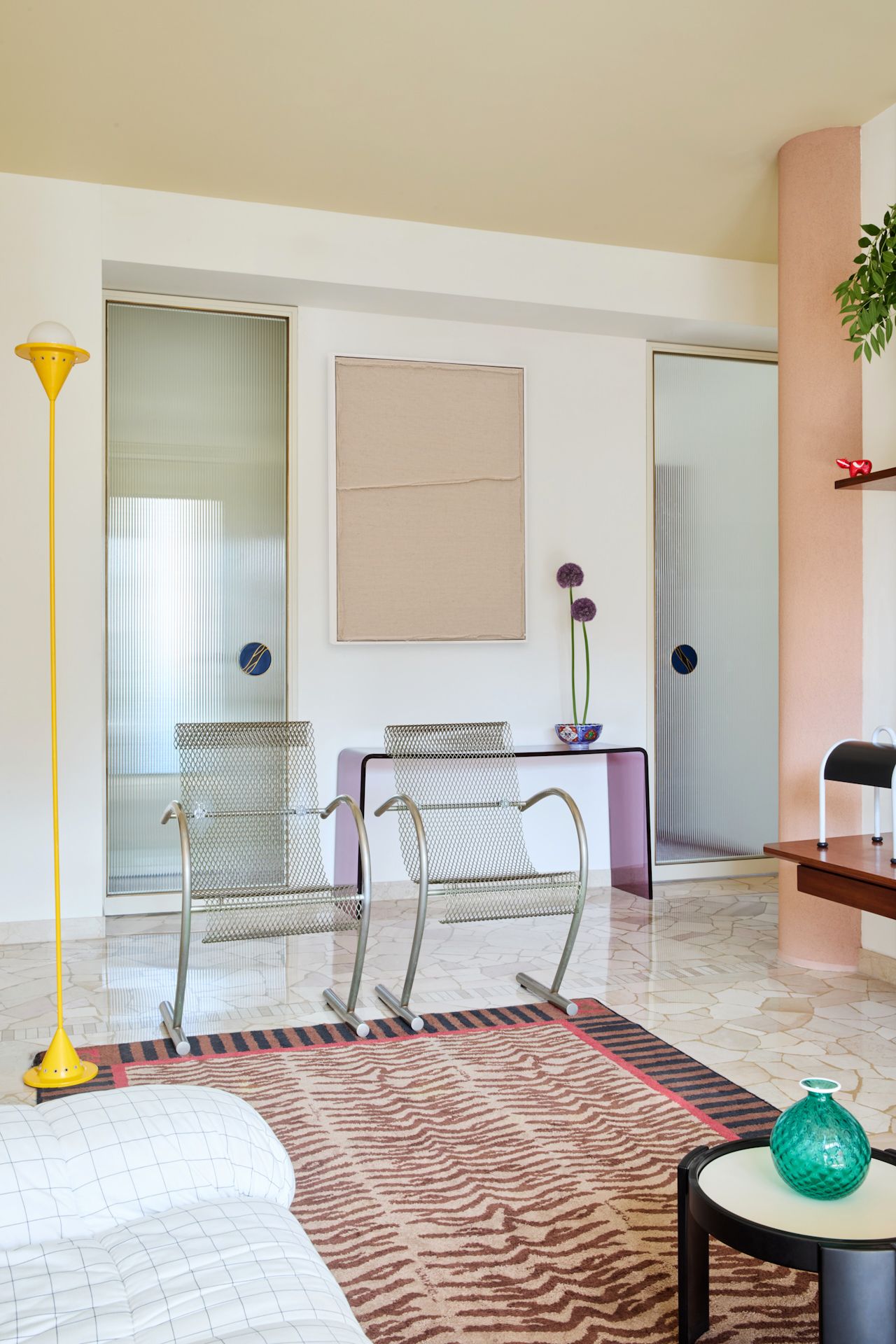
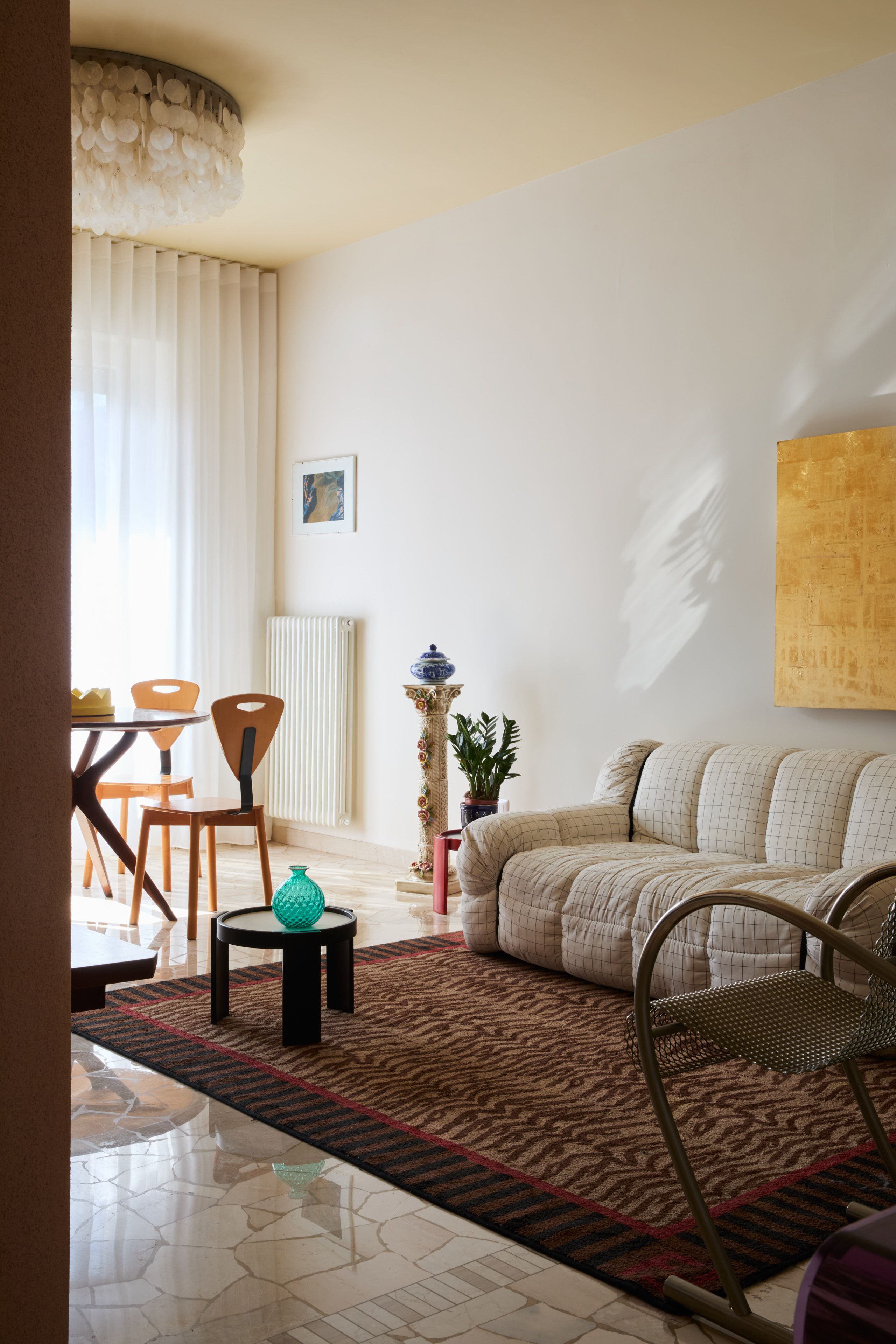
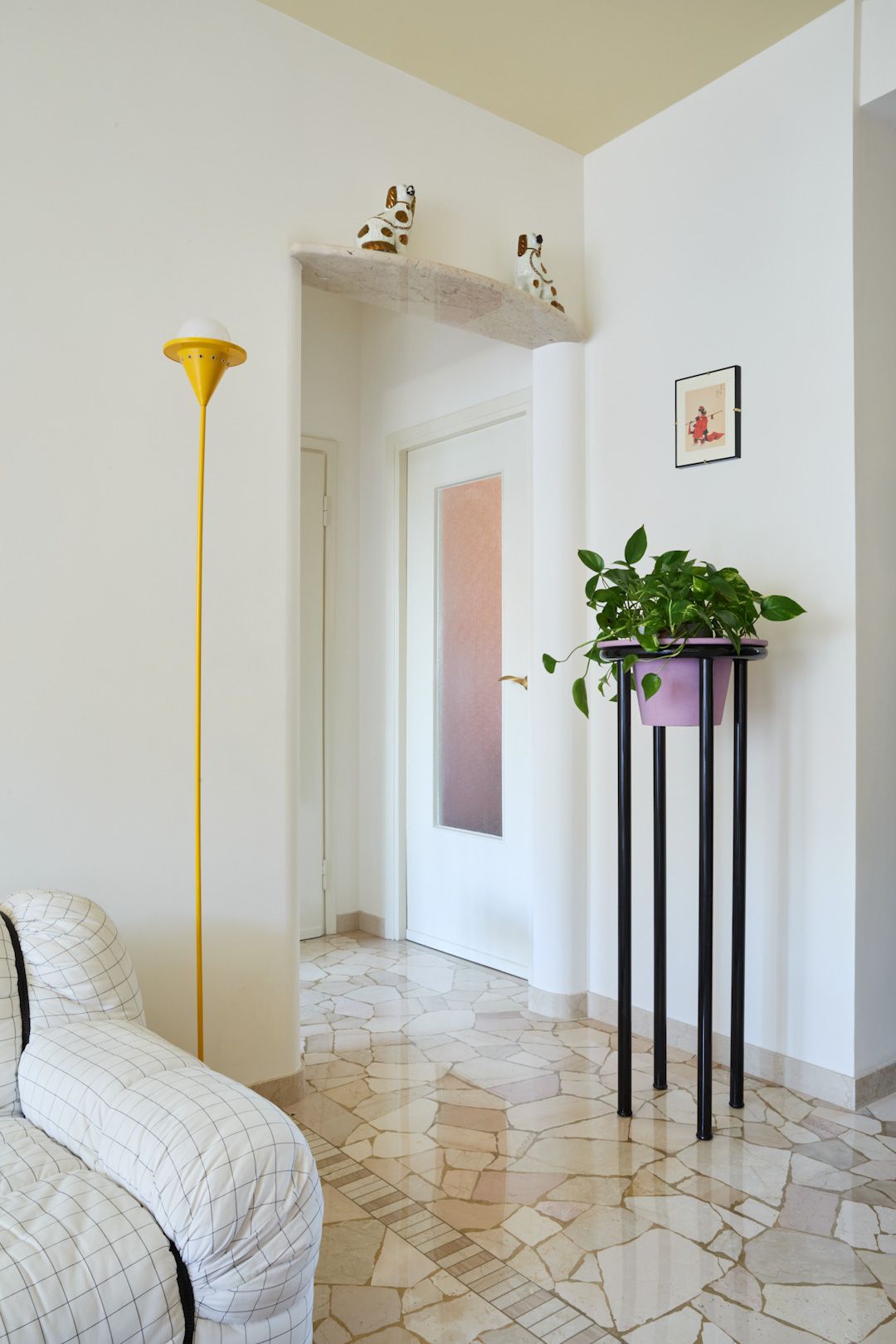
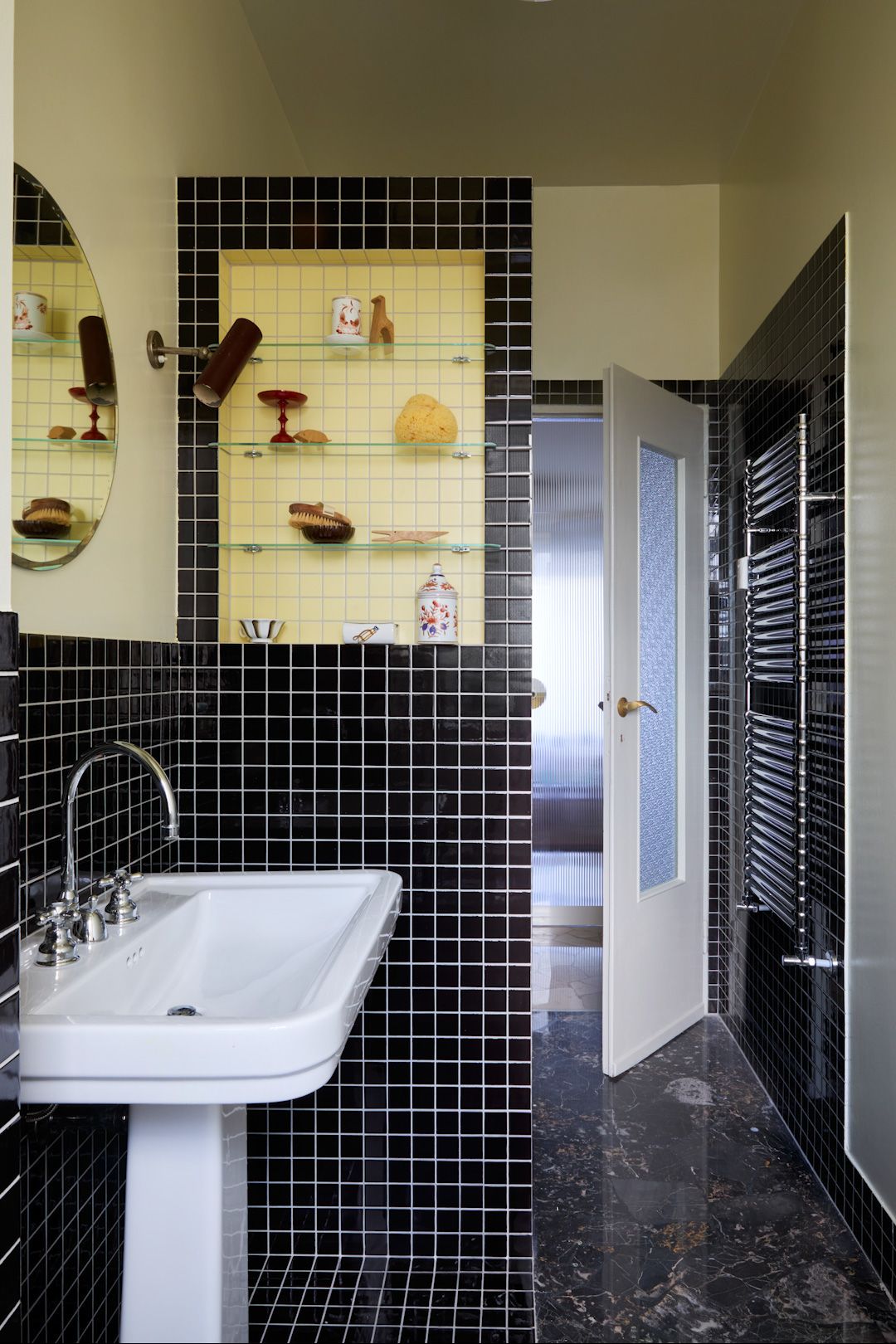
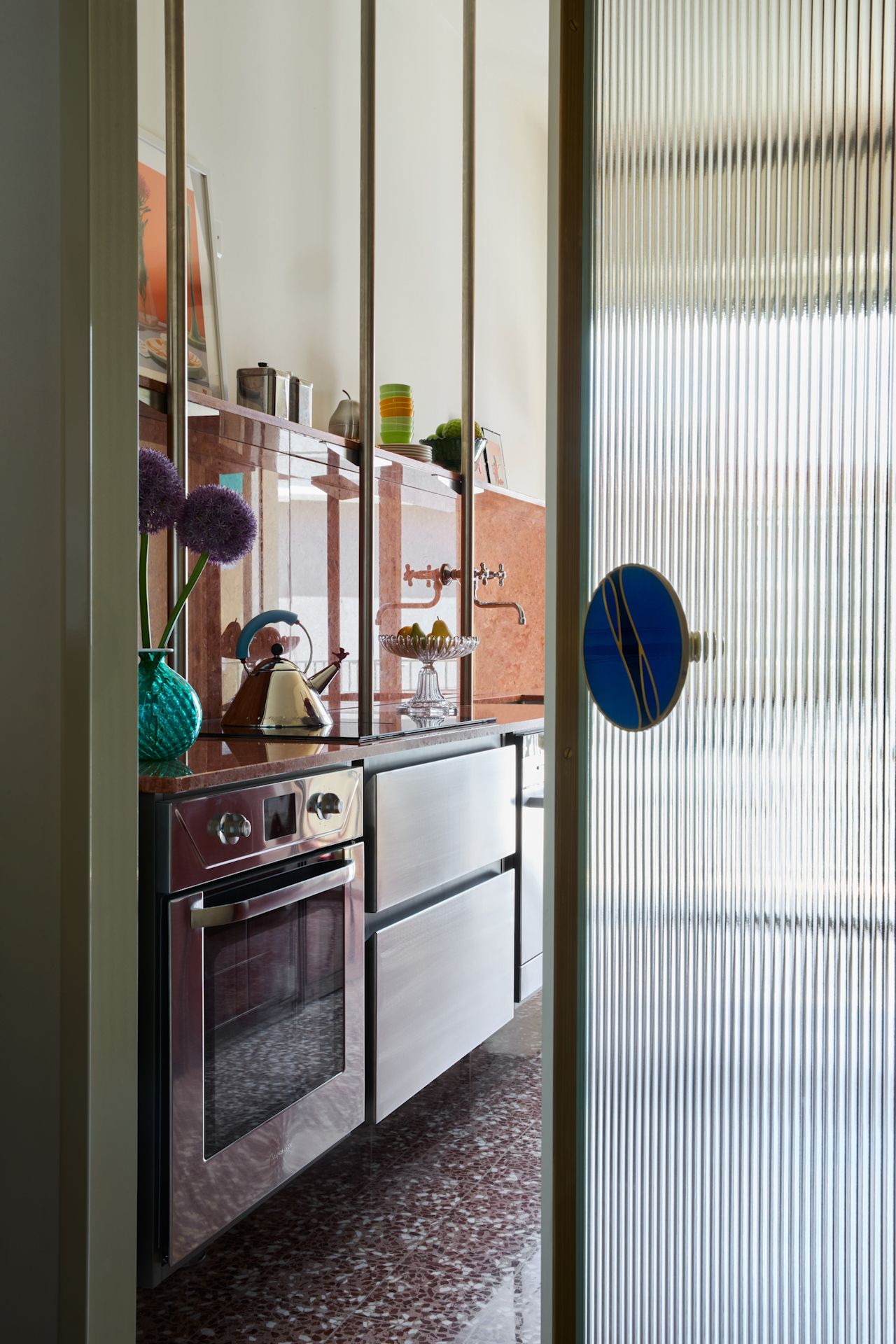
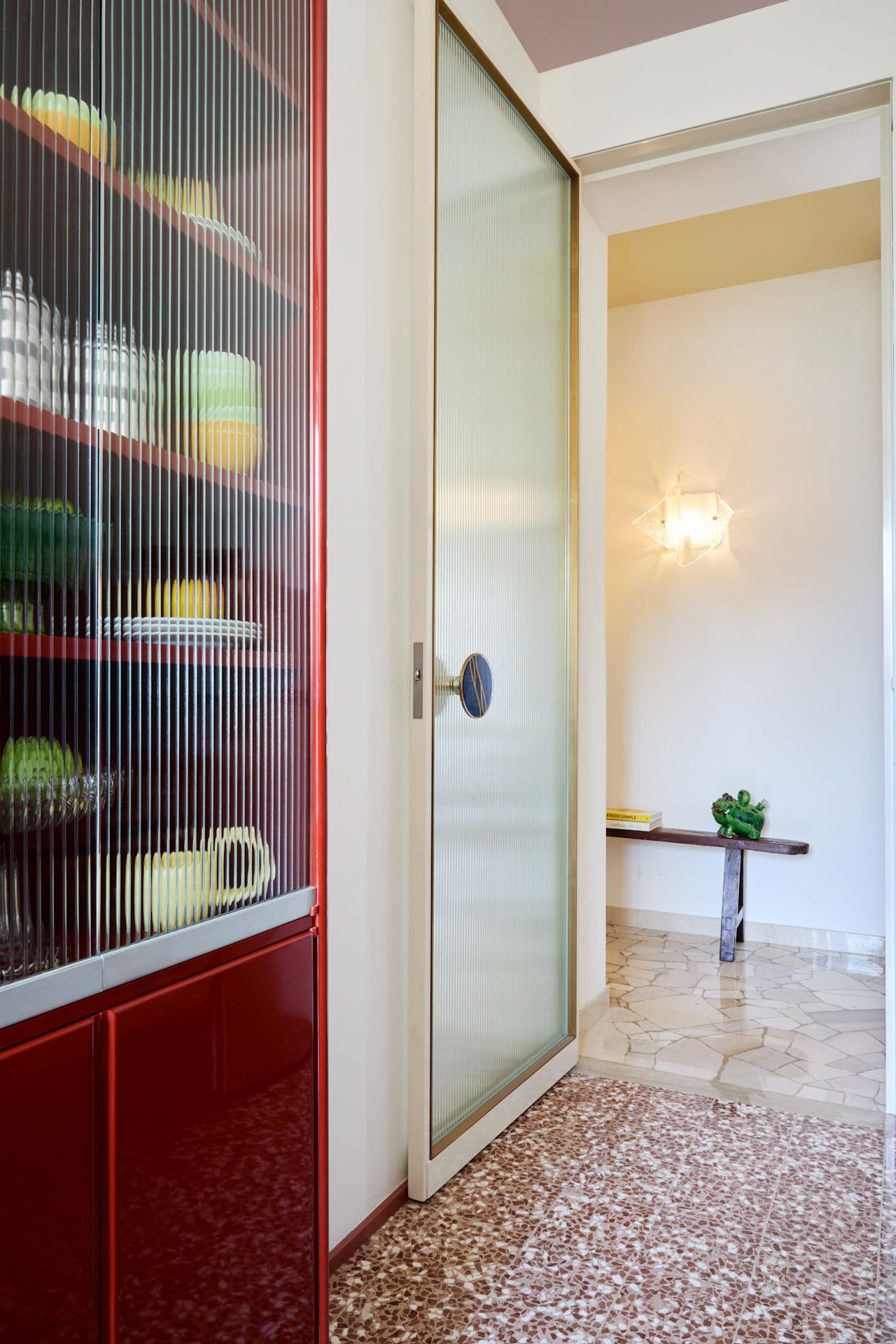
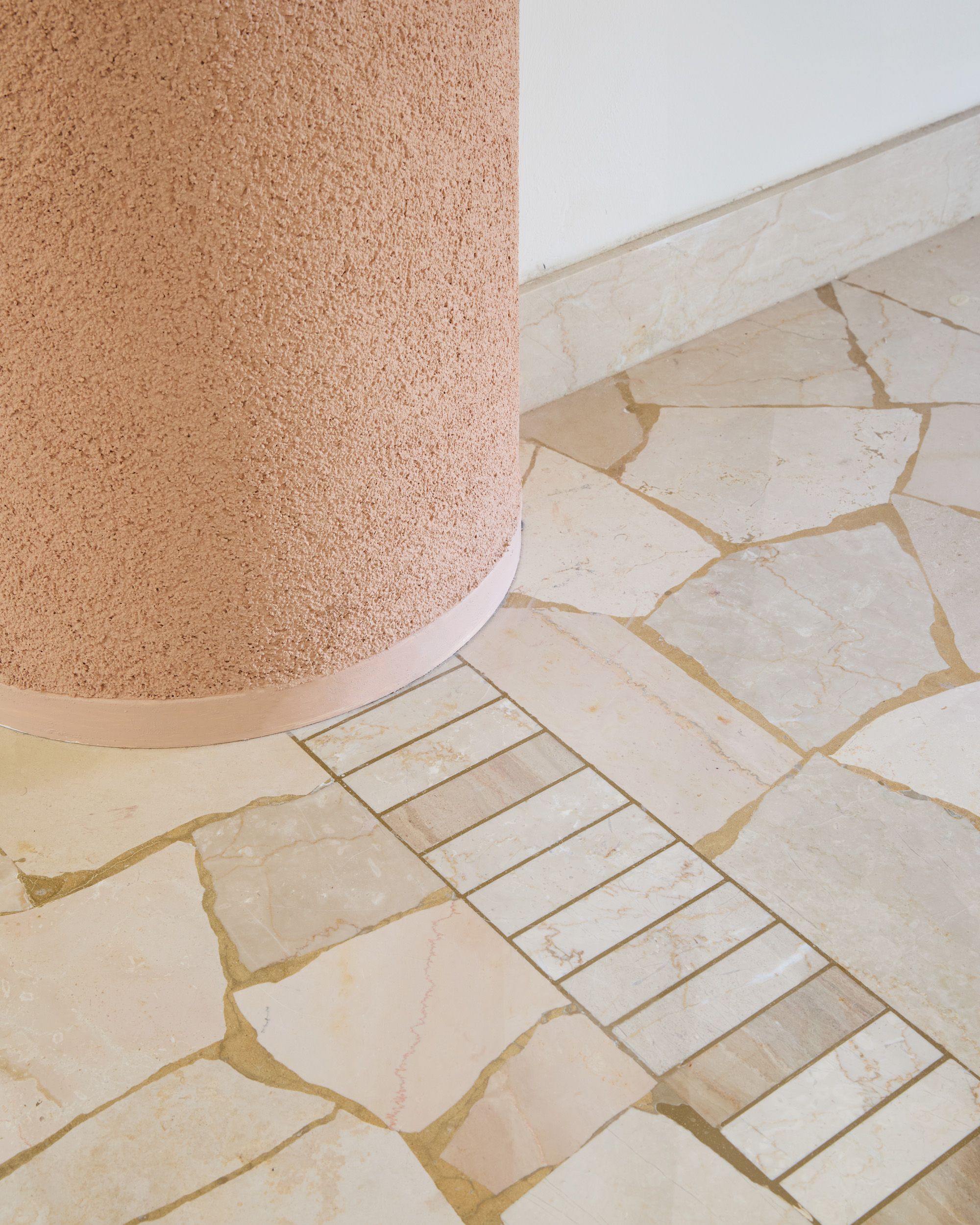
Some walls were demolished to enlarge the living area and rethink the spatial layout, breaking up the corridor. This gesture allowed light to flow between the living room and the adjacent rooms, mediated by two large glass doors with blue enameled handles from the Goffredo Reggiani factory. The palladiana floors were preserved, and during demolition, inserts were designed: in the living room, a line of composite marbles on the footprint of the demolished wall forms a decorative motif; in the bathroom, half of the original black marble floor was retained, while the rest was covered in ceramic. “Threshold” spaces were highlighted with strategic voids to showcase objects with a specific meaning: a marble shelf above the passageway to the sleeping area gains importance when adorned with a pair of English ceramic dog figurines, the new guardians of the home.
Wunderkammer, passageway to the sleeping area
05
Wunderkammer, passageway to the sleeping area
Wunderkammer, Living room n°4
06
Wunderkammer, Living room n°4
Wunderkammer, Shelf detail
07
Wunderkammer, Shelf detail
Wunderkammer, Bathroom
08
Wunderkammer, Bathroom
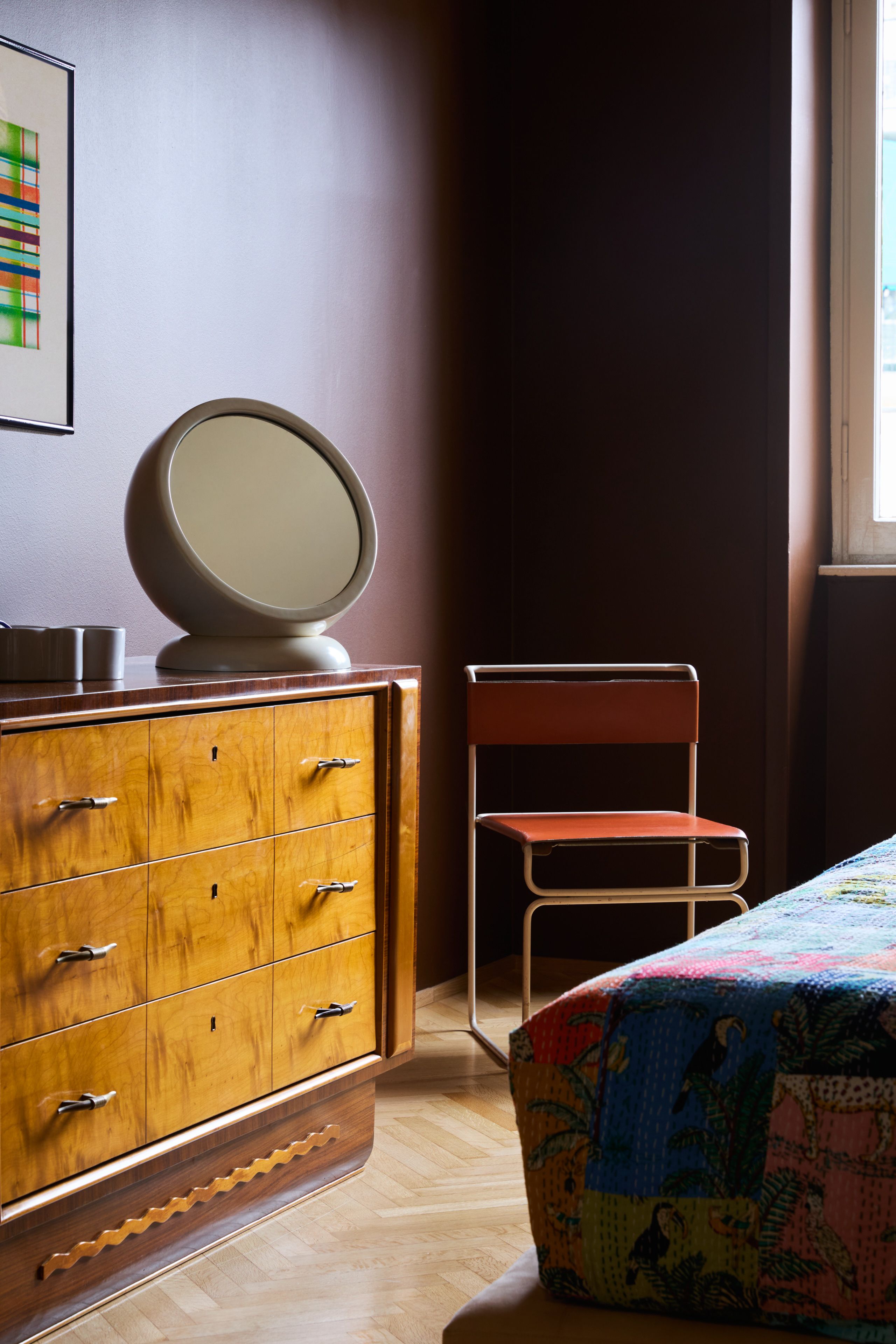
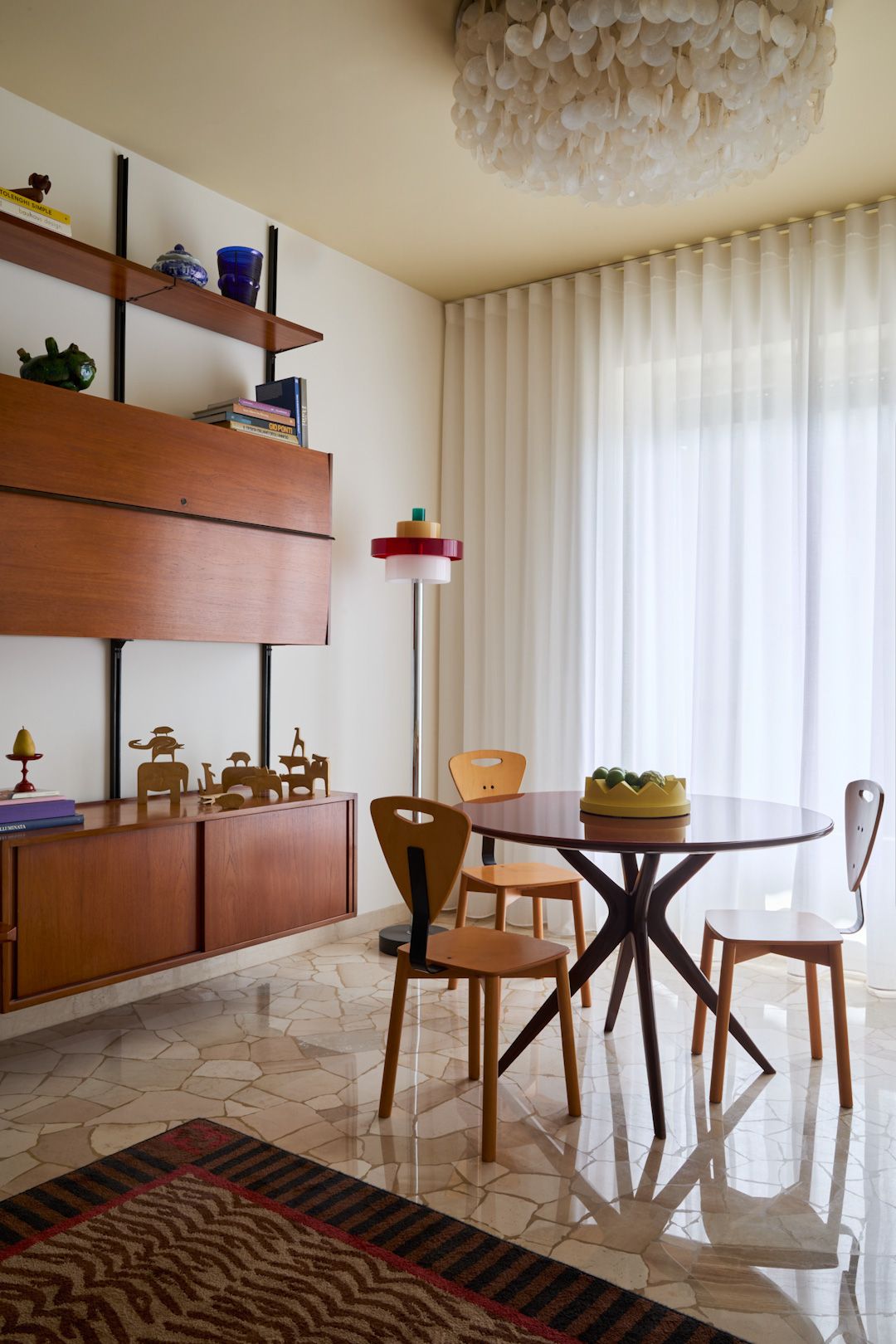
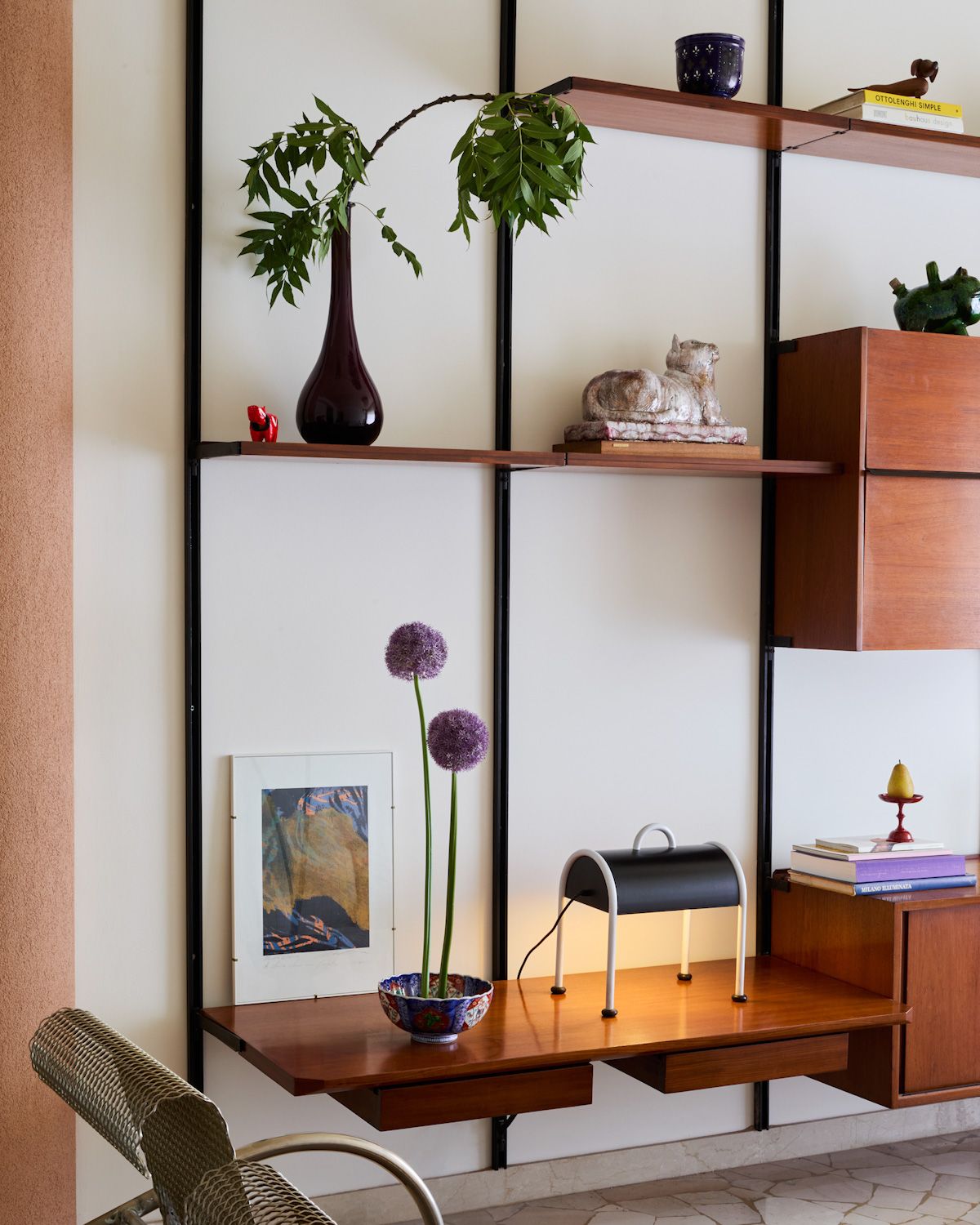
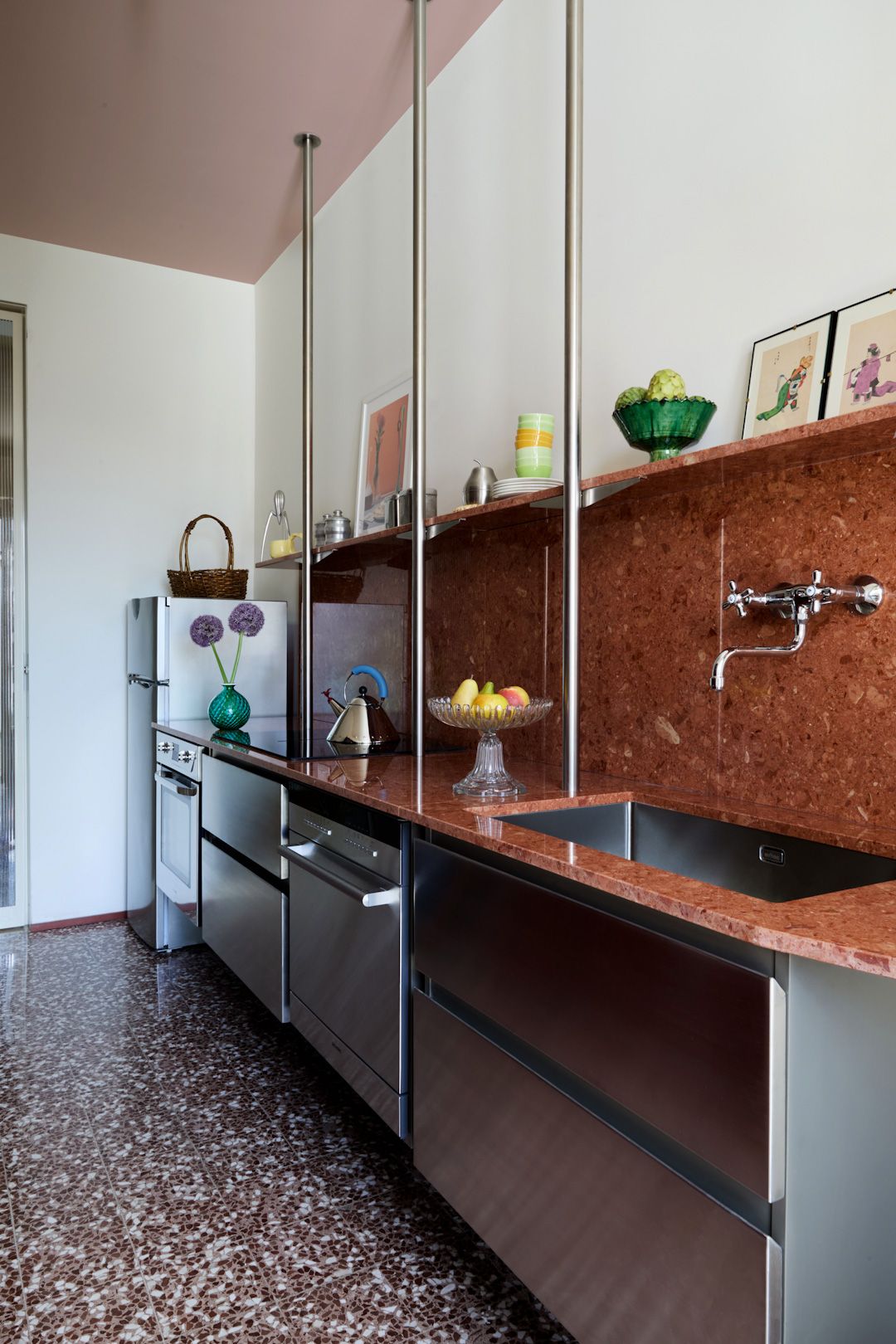
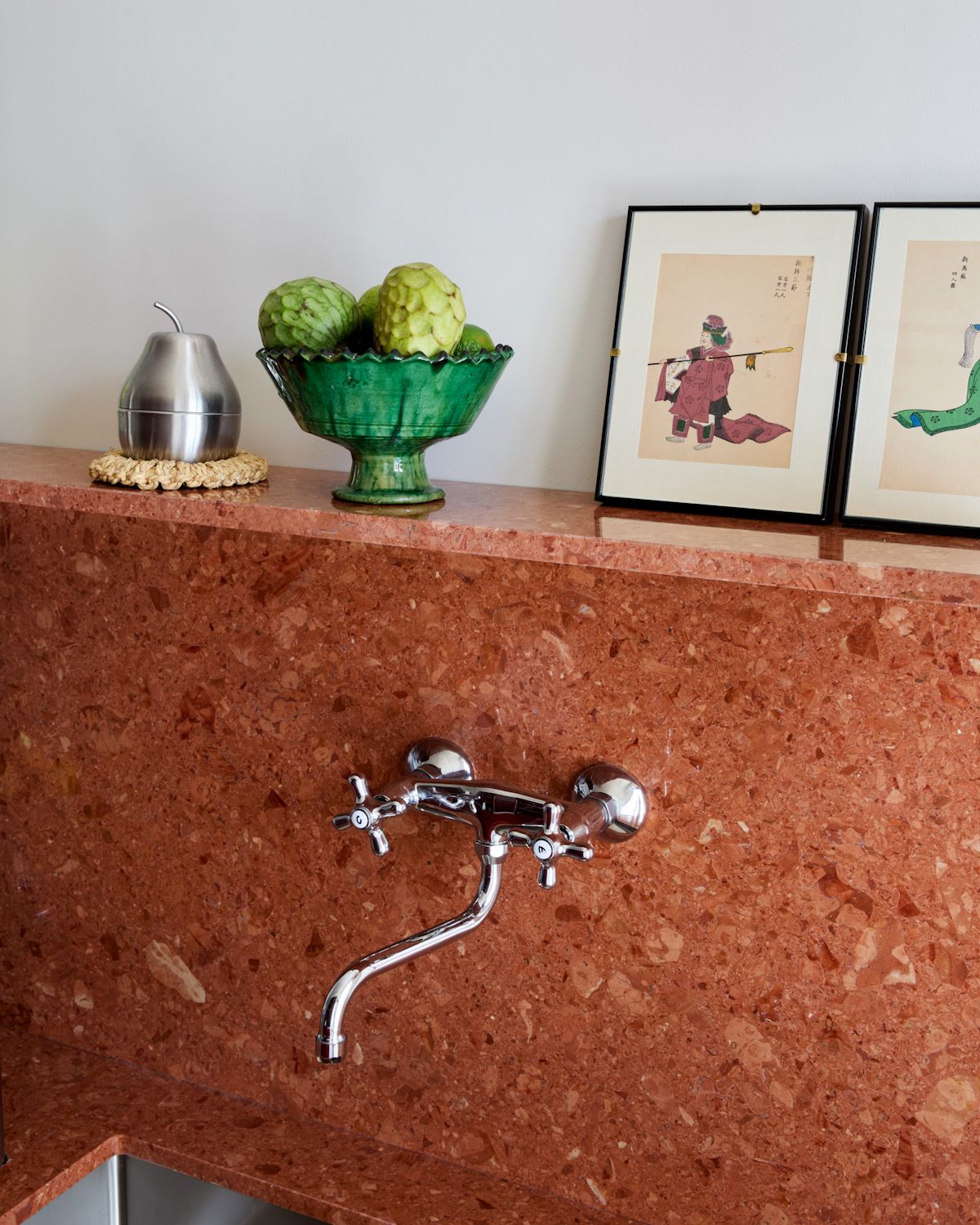
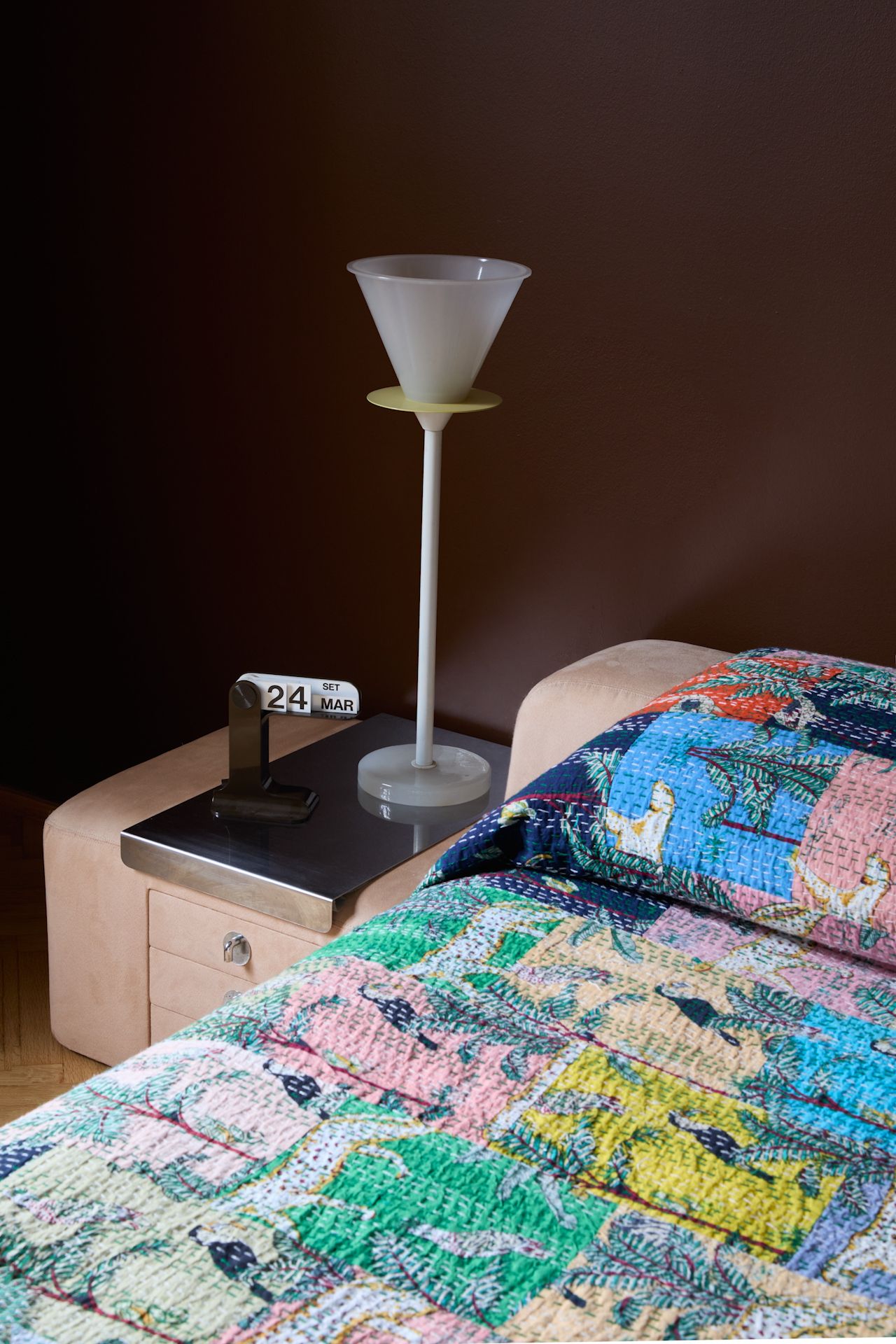
The custom-made steel kitchen, suspended on floor-to-ceiling posts and floating above the original brick-colored terrazzo floor, is a prototype designed by Federico and created in collaboration with “Officina 84”, taking inspiration by the “puntello bookcase” model. Facing it is the red lacquer Olinto cabinet, designed by Kazuhide Takahama in the 1960s, now filled with Giulia’s ceramics. The chosen color scheme emphasizes the ceilings, leaving the walls white—blank canvases for furniture rich in character: the large bookcase by Osvaldo Borsani, the Strips sofa by Cini Boeri, armchairs by Shiro Kuramata, and lamps by Ettore Sottsass and Verner Panton. The only exception is the bedroom, where chocolate-colored walls envelop the homeowners in a cozy and dreamlike atmosphere.
Wunderkammer, Kitchen
09
Wunderkammer, Kitchen
Wunderkammer, Kitchen n°2
10
Wunderkammer, Kitchen n°2
Wunderkammer, Kitchen detail
11
Wunderkammer, Kitchen detail
Wunderkammer, bedroom
12
Wunderkammer, bedroom
Wunderkammer, door
13
Wunderkammer, door
Wunderkammer, owner
14
Wunderkammer, owner
Wunderkammer
SPACES
2024
Milano
Photo credits:
Carlo di Pasquale

More Projects

Inserti, three vases